


Introduction to Traditional Moroccan Culture
Traditional Moroccan culture is a mesmerizing tapestry, interwoven from the threads of various civilizations. Reflecting influences from ancient Berber traditions to Arab, African, and European cultures, Morocco captivates visitors with its vibrant and colorful heritage. Whether in the intricate patterns of Moroccan mosaics or the rhythmic beats of traditional music, the country’s cultural identity is an exotic, harmonious blend that radiates through every aspect of daily life. Here, tradition effortlessly meets modernity, offering travelers a truly immersive experience into its customs, climate, and more.
Traditional Moroccan Clothing
The Djellaba and Caftan
A prominent element of traditional Moroccan culture is its clothing. The Djellaba, a long, loose robe with a hood, is an iconic garment worn by both men and women. More than just clothing, it symbolizes Moroccan pride. Crafted from a variety of materials—from lightweight cotton to luxurious wool—the Djellaba is adaptable for every season. The hood, or “qob,” provides practical protection from the elements. On special occasions like weddings and religious celebrations, women adorn themselves in the Caftan, an elaborate, intricately embroidered garment showcasing Moroccan artisanship and detailed needlework.
The Significance of Traditional Attire
Moroccan attire is not only practical, offering comfort across varied climates, but it also holds deep cultural significance. The choice of fabric, patterns, and colors can reveal much about the wearer’s social standing, origin, and marital status. These garments are cherished family heirlooms, passed down through generations, and remain a meaningful way for Moroccans to honor their roots.
Moroccan Cuisine: A Culinary Delight
The Basics of Moroccan Cuisine
Traditional Moroccan culture is celebrated through its cuisine, renowned for its bold flavors and aromatic spices. Drawing from Berber, Arab, Andalusian, and Mediterranean influences, Moroccan cuisine boasts a diversity of tastes. Spices like cumin, coriander, saffron, and cinnamon provide dishes with their distinctive flavors, while fresh herbs such as parsley, cilantro, and mint enhance their taste. Staples like olive oil, olives, and preserved lemons add depth to Moroccan dishes, and the combination of sweet and savory elements—like dried fruits paired with meats—creates a uniquely delightful culinary experience.
Popular Moroccan Dishes
Among the many tantalizing Moroccan dishes are:
- Couscous: A traditional dish made from steamed semolina grains and served with vegetables and meat. Typically prepared on Fridays, couscous brings families together, fostering communal bonding over food.
- Tagine: A flavorful stew of meat, vegetables, and spices slow-cooked in a conical clay pot. Tagines vary across regions, with combinations like lamb with prunes, chicken with preserved lemons, and hearty vegetable mixes.
- Harira: A comforting soup made with tomatoes, lentils, and chickpeas, often served during Ramadan. This nourishing dish, typically accompanied by dates and chebakia pastries, is a beloved part of breaking the fast.
The Art and Music of Morocco
Traditional Moroccan Music
Music is an integral part of traditional Moroccan culture, with the genre of Gnawa taking center stage. Blending African, Berber, and Arabic influences, Gnawa music is characterized by its hypnotic rhythms and spiritual lyrics. Played with traditional instruments like the guembri (a three-stringed lute) and qraqeb (metal castanets), it produces a captivating sound often used in rituals and ceremonies. Festivals across Morocco bring Gnawa music to life, enhancing the communal experience with dancing and unity.
Moroccan Art and Crafts
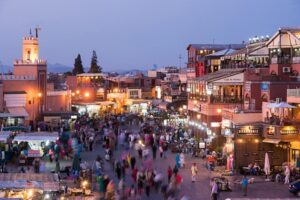
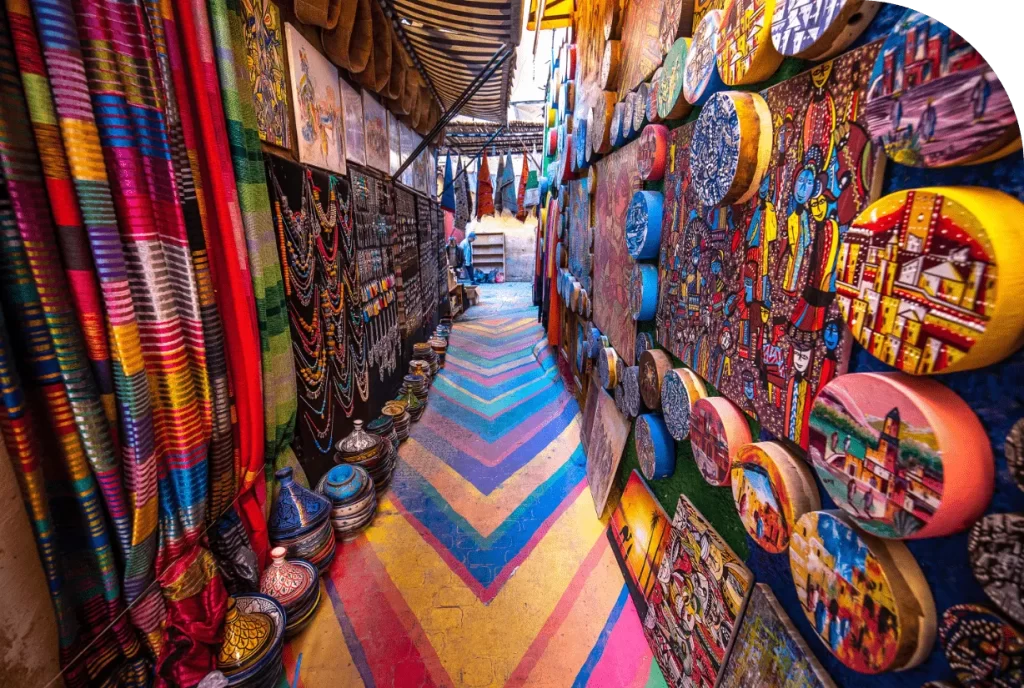
The art of Morocco is vibrant and detailed, from the geometric patterns of Zellige tilework to the fine embroidery on traditional garments. In the bustling souks, visitors can find handmade carpets, pottery, and jewelry that reflect Morocco’s rich artistic heritage. Moroccan craftsmanship is meticulous, with symbolic motifs like the hand of Fatima, or “Khamsa,” believed to protect against the evil eye. Every piece is a unique work of art, showcasing the creativity and talent of Moroccan artisans.
Festivals and Celebrations
Religious and Cultural Festivals
Traditional Moroccan culture thrives in its festivals, such as:
- Eid al-Fitr & Eid al-Adha: Major Islamic holidays celebrated with feasts, prayers, and charity. These celebrations unite families and communities in shared joy and blessings.
- Moussem: Local festivals that honor saints or celebrate harvests, featuring traditional music, dance, and rituals. The Moussem of Tan-Tan, a UNESCO-recognized event, celebrates Saharan tribes’ nomadic heritage through camel races, music, and crafts.
Modern Festivals
Morocco also hosts modern festivals like the Marrakech International Film Festival and the Fez Festival of World Sacred Music, drawing global visitors. These events highlight Morocco’s cultural diversity and evolving arts scene, offering a modern complement to its traditional celebrations.
The Role of Hospitality in Moroccan Culture
The Tradition of Tea
Hospitality is deeply embedded in traditional Moroccan culture, and Moroccan tea—often called “Berber whiskey”—symbolizes this welcoming spirit. Prepared with green tea leaves, mint, and sugar, tea is ceremoniously served to guests as a sign of warmth and friendship. Pouring from a height creates a frothy top, enhancing the presentation.
Inviting Guests in Traditional Moroccan Culture
When visiting a Moroccan home, tea is always offered, and to decline it might be considered impolite. This tradition exemplifies the values of generosity and hospitality, with Moroccans taking pride in making guests feel comfortable and at home.
Conclusion: Immerse Yourself in Traditional Moroccan Culture
Traditional Moroccan culture is a vibrant celebration of the country’s rich heritage. Its clothing, cuisine, music, and festivals offer a multi-sensory journey into a world of beauty and tradition. From the bustling souks to the flavors of a traditional meal, every experience leaves an unforgettable impression. Dive into the captivating and enriching world of traditional Moroccan culture, and let its beauty enchant your spirit.
To learn more about Morocco’s rich cultural heritage and explore our selection of hotel apartments, visit our website today and plan your unforgettable Moroccan adventure.