



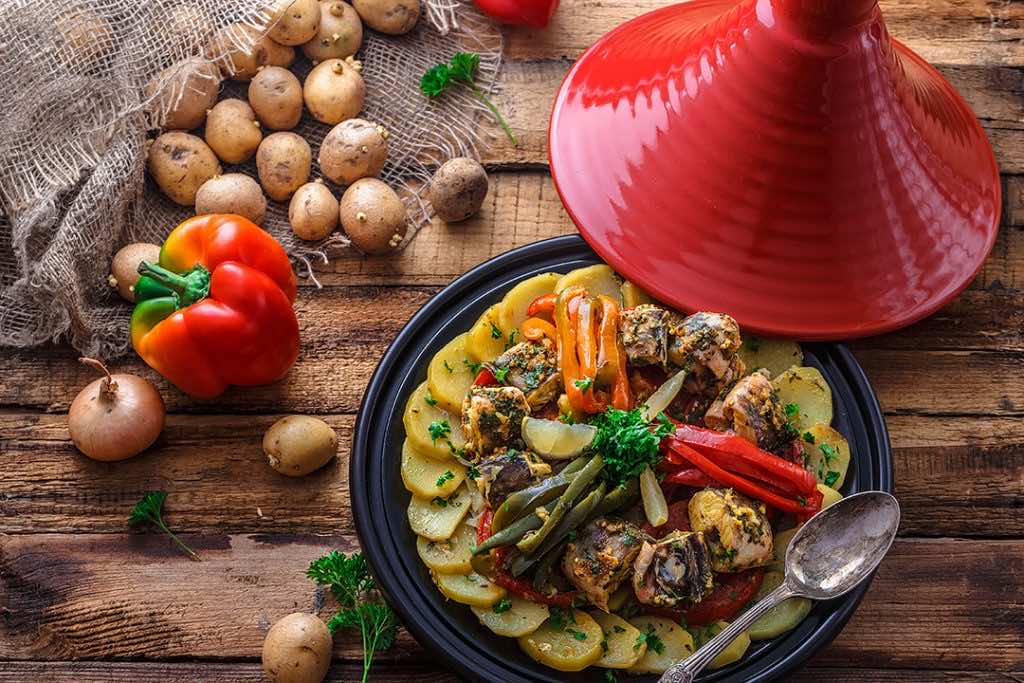
Moroccan food is an enchanting fusion of flavors, aromas, and culinary traditions that have developed over centuries. This multifaceted cuisine captures the essence of the country’s rich history and diverse cultural influences, creating a unique and unforgettable gastronomic experience. Each dish bursts with flavor and tells a story of Morocco’s vibrant culture, stunning landscapes, and warm hospitality. Ready to experience the magic of Moroccan cuisine firsthand? Contact our agency via WhatsApp to start planning your Moroccan culinary adventure today!
Essential Ingredients in Moroccan Food
The heart of Moroccan food lies in its fresh, flavorful ingredients. Some of the most essential components include:
- Spices: Cumin, saffron, ginger, paprika, and cinnamon add warmth and depth to every dish.
- Herbs: Cilantro, parsley, and mint infuse dishes with a bright, fresh aroma.
- Vegetables: Tomatoes, onions, carrots, and bell peppers provide the hearty base for stews and tagines.
- Fruits: Dates, figs, lemons, and oranges bring natural sweetness and acidity to both savory and sweet plates.
- Grains: Couscous, rice, and wheat serve as the backbone of Moroccan meals, providing sustenance and texture.
- Proteins: Lamb, chicken, beef, and seafood are staples that elevate Moroccan dishes to a whole new level.
These ingredients are masterfully blended to craft aromatic dishes that tantalize all senses. The interplay of spices, fresh herbs, and produce delivers a truly Moroccan symphony of flavors.
Quintessential Dishes in Moroccan Food
Moroccan Food: Tagines
Tagines are slow-cooked stews, aptly named after the traditional earthenware pot in which they are prepared. These dishes typically feature meat, poultry, or vegetables, enhanced by a rich combination of spices. The slow-cooking process melds the flavors together, resulting in a deeply comforting meal. Must-try tagines include:
- Chicken Tagine with Olives and Preserved Lemons: A tangy, savory delight.
- Lamb Tagine with Prunes and Almonds: A beautiful balance of sweet and tender flavors.
- Vegetable Tagine with Chickpeas and Carrots: A wholesome, flavorful vegetarian option.
Each bite of tagine unveils the love and dedication poured into its preparation. The tender meats, softened vegetables, and aromatic sauces create a seamless harmony of flavors that make this dish a Moroccan classic.
Moroccan Food: Couscous
Couscous is an indispensable grain in Moroccan cuisine. Steamed to achieve a light, fluffy texture, it is typically paired with vegetables, meat, or poultry, and served with a flavorful broth. The process of steaming couscous multiple times requires great patience, but the end result is a dish that absorbs the flavors of its accompaniments beautifully.
Moroccan Food: Harira
Harira is a nourishing soup often savored during the holy month of Ramadan. Packed with tomatoes, lentils, chickpeas, and an array of spices, this comforting bowl is full of warmth. Usually accompanied by dates and fresh bread, Harira balances sweet and savory notes, bringing communities together over shared meals.
The Artistry of Cooking Moroccan Food
Spice Blends in Moroccan Food
Moroccan cuisine is distinguished by its unique spice blends, like ras el hanout and chermoula. These blends lend dishes their complexity and depth, with each family often having its own cherished recipe passed down through generations.
Cooking Techniques in Moroccan Food
Slow Cooking
Many Moroccan dishes utilize slow-cooking methods, allowing flavors to develop fully. This technique shines in dishes like tagines and stews, where ingredients simmer for hours until perfectly tender, absorbing the aromatic sauces.
Grilling and Roasting
Grilling and roasting are also prevalent in Moroccan cooking. Whether it’s meats, vegetables, or fruits, grilling enhances their natural flavors, creating caramelized exteriors while keeping the interiors juicy and tender. Grilled dishes like kebabs and kefta often come with flavorful dips and sauces for an extra taste sensation.
Moroccan Food and Hospitality
In Morocco, food is more than sustenance—it’s a gesture of hospitality and a way to forge connections. Meals are communal, shared with family and friends, reflecting the deep respect and warmth Moroccan people extend to their guests.
Moroccan Tea Ceremony
No Moroccan dining experience is complete without the tea ceremony. Mint tea, often referred to as “Moroccan whiskey,” is served in small glasses and poured from a height to create a frothy top. This sweet, hot tea is a symbol of friendship and hospitality, and it’s impolite to refuse a glass when offered.
In conclusion, Moroccan food is an exciting culinary journey offering a wealth of flavors, techniques, and cultural experiences. From the tantalizing spices to the slow-cooked tagines and unparalleled hospitality, Moroccan cuisine promises to captivate food enthusiasts and travelers alike. Each dish reflects a rich culinary heritage, emphasizing the importance of food in Moroccan culture. Visit our website to explore our selection of hotel apartments and begin your immersive journey into the captivating world of Moroccan gastronomy. Whether you’re an adventurous foodie or a curious traveler, this is a culinary adventure not to be missed!